lunes, 16 de mayo de 2016

Climate change puts 1.3bn people and $158tn at risk, says World Bank

Submerged huts after flooding in Nigeria village

The global community is badly prepared for a rapid increase in climate change-related natural disasters that by 2050 will put 1.3 billion people at risk, according to the World Bank.
Urging better planning of cities before it was too late, a report published on Monday from a Bank-run body that focuses on disaster mitigation, said assets worth $158tn – double the total annual output of the global economy – would be in jeopardy by 2050 without preventative action.
The Global Facility for Disaster Reduction and Recovery said total damages from disasters had ballooned in recent decades but warned that worse could be in store as a result of a combination of global warming, an expanding population and the vulnerability of people crammed into slums in low-lying, fast-growing cities that are already overcrowded.
“With climate change and rising numbers of people in urban areas rapidly driving up future risks, there’s a real danger the world is woefully unprepared for what lies ahead,” said John Roome, the World Bank Group’s senior director for climate change.
“Unless we change our approach to future planning for cities and coastal areas that takes into account potential disasters, we run the real risk of locking in decisions that will lead to drastic increases in future losses.”
The facility’s report cited case studies showing that densely populated coastal cities are sinking at a time when sea levels are rising. It added that the annual cost of natural disasters in 136 coastal cities could increase from $6bn in 2010 to $1tn in 2070.
The report said that the number of deaths and the monetary losses from natural disasters varied from year to year, but the upward trend was pronounced.
Total annual damage – averaged over a 10-year period – had risen tenfold from 1976–1985 to 2005–2014, from $14bn to more than $140bn. The average number of people affected each year had risen over the same period from around 60 million people to more than 170 million.
Although developed countries have been responsible for the bulk of historic global emissions, poorer countries are more vulnerable to the impact of climate change and they demanded financial help from the west as part of last December’s breakthrough global deal to reduce emissions.
Oxfam this week called on rich countries to make good on the pledges made at the Paris conference to provide the funding to help developing countries adapt to the effects of global warming.
“Climate change is a brutal reality confronting millions of the world’s most vulnerable people. Their need for financial support to adapt to climate extremes is urgent and rising,” Oxfam said in its Unfinished Business report.
“International support for adaptation falls well short of what is needed. Latest estimates indicate that only 16% of international climate finance is currently dedicated to adaptation – a mere $4bn–$6bn per year of which is public finance.” 
According to the the facility, disaster risk is affected by three factors. It said these were: hazard – the frequency of potentially dangerous naturally occurring events, such as earthquakes or tropical cyclones; exposure – the size of the population and the economic assets located in hazard-prone areas; and vulnerability – the susceptibility of the exposed elements to the natural hazard.
It added that hazard was increasing due to climate change; exposure was going up because more people were living in hazardous areas and that vulnerability was on the rise because of badly designed and poorly planned housing.
The World Bank-run body said the population was expected to rise by at least 40% in 14 of the 20 most populated cities in the world between 2015 and 2030, with some cities growing by 10 million people in that period. “Many of the largest cities are located in deltas and are highly prone to floods and other hazards, and as these cities grow, an ever greater number of people and more assets are at risk of disaster.”
Francis Ghesquiere, head of the secretariat at the The Global Facility for Disaster Reduction and Recovery, said: “By promoting policies that reduce risk and avoiding actions to drive up risk, we can positively influence the risk environment of the future. The drivers of future risk are within the control of decision makers today. They must seize the moment.”

Sinéad O'Connor found safe after going missing from Chicago suburb

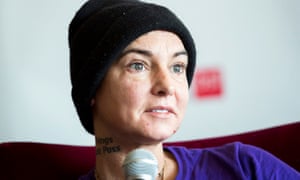
Sinéad O’Connor has been found safe, local police have confirmed, after a desperate hunt was launched to find the Irish singer when she disappeared on Sunday from a suburb of Chicago.
News that she had not been seen since early on Sunday morning immediately sparked alarm as reports emerged on Monday that authorities were concerned for her health.
Police in the Chicago suburb of Wilmette released a statement on Monday in which they said they were “seeking to check the well-being” of the 49-year-old.
O’Connor “reportedly left the Wilmette area for a bicycle ride yesterday (Sunday) at 6 am (1100 GMT) and has not returned”, the statement said.
Worried messages were soon posted on the singer’s Facebook page and concern intensified as it became clear there had been no reported sightings of O’Connor for more than 24 hours.
But she surfaced not long after, Wilmette police confirmed.
A concerned caller had contacted police after seeing O’Connor on a bicycle on Sunday.
One report said O’Connor was riding a Raleigh motorised bike wearing a black parka, black leather pants and a sweatshirt with “Ireland” on the back.
O’Connor appears to have posted on her official Facebook page at around 9am on Sunday, addressing her adult son Jake and talking about her custody battle with her ex-partner Donal Lunny.
But she also wrote a post on 14 May declaring that she was heading for North Carolina to take part in a protest about the new legislation there that dictates that transgender people must use the bathroom that matches the sex on their birth certificate even if that does not match their gender identity.
O’Connor has previously posted distressing updates on Facebook, including last November, when she wrote that she had taken an overdose.
Irish singer Sinead O’Connor raised concern when she was not seen for more than 24 hours.
“There is only so much any woman can be expected to bear,” she wrote. “What was done to me this week was appalling cruelty.
“The last two nights finished me off. I have taken an overdose. There is no other way to get respect. I am not at home, I’m at a hotel, somewhere in Ireland, under another name.”
O’Connor was later found safe.
The singer has opened up about her struggles with suicidal thoughts in the past. In 2007, she told Oprah Winfrey that she had been diagnosed with bipolar disorder and attempted suicide on her 33rd birthday.
In recent weeks, she became embroiled in controversy after the death of Prince, who wrote her breakthrough hit Nothing Compares 2 U.
The talkshow host Arsenio Hall filed a $5m lawsuit against O’Connor after she posted on Facebook to allege that Hall had given Prince drugs “over the decades”.
She said she had reported Hall to the Carver County sheriff’s office in Minnesota, which is investigating Prince’s death, and that “anyone imagining Prince was not a longtime hard drug user is living in cloudcuckooland”.
O’Connor has recorded 10 solo albums, and became a global star in the early 1990s, but she has never been a stranger to controversy. She memorably tore apart a photo of Pope John Paul II during Saturday Night Live in 1992, declaring: “Fight the real enemy!”

German politicians criticise Boris Johnson for EU-Hitler comments

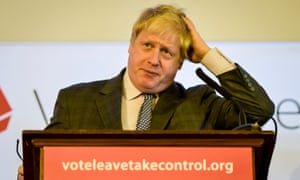
German politicians have criticised the former London mayor Boris Johnson forclaiming the EU has the same goal as Hitler in trying to create a political superstate.
“Anyone who allows himself to stoop to such polemics shows that they are running out of proper arguments”, said Jürgen Hardt, the foreign affairs spokesman for Angela Merkel’s Christian Democrats. “If we look at the cultural life and the way business is done on the continent, it is clear that Europe has never been more British than it is now. We want things to remain that way – with Britain inside the EU,” Hardt said.

Johnson’s remark that the EU was an attempt to recreate Hitler’s and Napoleon’s aims of unifying Europe “by different methods” was widely reported in German media on Monday.
In an interview with the Sunday Telegraph, Johnson, seen as the de facto leader of the leave campaign, said the past 2,000 years of European history had been dominated by doomed attempts to unify the continent under a single government to recreate the “golden age” of the Romans.
“Napoleon, Hitler, various people tried this out, and it ends tragically. The EU is an attempt to do this by different methods,” he said.
Boris Johnson
Axel Schäfer, European affairs spokesman for the Social Democratic party (SPD), said: “Like many other politicians in Germany I am speechless at what stupidity nationalism can trigger in seemingly intelligent people.
“The European Union is a club which 28 member states have joined voluntarily, not by force, and which is made up of them, and not of Brussels. It is also a club in which Britain plays a leading role, and which would be unimaginable without British leadership.”
Schäfer told the Guardian he was sad to see Johnson joining “a group of anti-European nationalists made up of Hungary’s prime minister, Viktor Orbán, and Front National leader Marine Le Pen”.
“Anyone who makes such comparisons shows that they have run out of proper arguments,” he added.
Johnson’s comments came before of a series of meetings between British and German politicians in London this week.
Both Hardt and Thomas Oppermann, the leader of the SPD’s parliamentary faction, will be meeting members of the leave and remain camps to discuss the consequences of a British vote to leave the EU. Hardt said there were no plans to meet Johnson.
So far, German politicians have been reluctant to comment in public on the referendum. But the Guardian has learned that Oppermann will present British MPs and diplomats with a copy of the winner of a short story competition that sends a warning about the consequences of Brexit.
The story, by 18-year-old student Stefan Endewald, is set in the year 2030. Britain asks Germany and France to be readmitted to the EU only 14 years after voting to leave, proposing a so-called “Brintro”. “They have finally noticed that we no longer need them as urgently as they need us,” the narrator remarks.