Italy’s attempts to put pressure on Egypt over the brutal killing of researcher Giulio Regeni are being hampered by a competing national security concern: getting Cairo’s cooperation on Libya.
Regeni’s murder early this year, which many experts believe was committed by agents of the Egyptian state, has created intense diplomatic tensions between Rome and Cairo, culminating in the recall of Italy’s ambassador to Egypt last month. Egypt has insisted it was not involved in Regeni’s death.
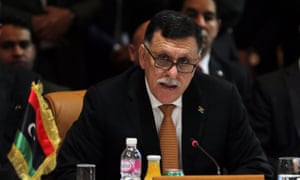
Italy and its allies who support the fledgling UN-backed government of Fayez al-Sarraj in Libya are mired in a complex fight in which Egypt’s alliance is seen as key to the new government’s success.
A senior Italian government official, speaking on condition of anonymity, saidItaly was concerned about Egypt’s alleged support for Khalifa Haftar, the anti-Islamist commander of Tobruk government forces in the east. The official claimed Egypt was giving military aid to Tobruk, causing an obstacle in the peace process.
Haftar commands forces battling against Libya Dawn, an alliance of western Libyan militias, some of which support the UN-backed government and some the Islamist-led national salvation government, also based in Tripoli.
Italy’s foreign ministry declined to comment on Egypt’s alleged support for Tobruk forces. But the intense wrangling will colour the next steps Rome takes on the Regeni matter.
Farj Selim al-Habaty, the Libyan military attache to Cairo, who is loyal to the Tobruk government, said: “There’s cooperation on an intelligence level, but there’s no export of weapons from Egypt to Libya.”
He added that the support was “just logistical” and that Egypt will eventually support the Libyan unity government, once the country’s parliament has finished voting on the issue. The next step, he said, was “calling for the lifting of the arms embargo”.
While the Egyptian president, Abdel Fatah al-Sisi, has openly backed Haftar politically, he also met Sarraj this month.
Paolo Gentiloni, Italy’s foreign minister, said this month that Haftar “can and should” have a role in a transition government in Libya but that his role would ultimately be decided by the Sarraj government.
Philippines’ president-elect Rodrigo Duterte has vowed to reintroduce capital punishment, give security forces the power to “shoot-to-kill” criminals and offer cabinet posts to communists.
In his first press conference since winning the 9 May elections in a landslide, Duterte, the tough-talking mayor of the southern city of Davao, also said he will launch a major military offensive to destroy Abu Sayyaf Islamist extremists on southern Jolo Island.
The announcements, a sharp departure from current government policy, reflect his brash campaign pledge to end crime and corruption in the impoverished nation in three to six months.
Police officials have said the plan is undoable, and that crime remains prevalent in Davao city, where Duterte has served as mayor for more than 22 years.
Duterte also said he would pursue peace talks with Marxist guerrillas and as an olive branch would offer government roles to the Communist party, including its exiled founder – most likely the cabinet posts of environment and natural resources, agrarian reform, social welfare, and labour.
“They are the most vigilant group in the Philippines about labour so they would get it,” Duterte said.
The move would be strongly opposed by big business and industry.
Duterte said he wanted capital punishment – which was abolished in 2006 under then-president Gloria Arroyo – to be reintroduced for a wide range of crimes, particularly drugs, but also rape, murder and robbery.
Capital punishment by hanging, he said, should be imposed for heinous crimes, and criminals convicted of killing along with robbery and rape should be meted “double the hanging.”
“After the first hanging, there will be another ceremony for the second time until the head is completely severed from the body,” he said.
He added he preferred death by hanging to a firing squad because he did not want to waste bullets, and because he believed snapping the spine with a noose was more humane.
Duterte vowed during the campaign to kill tens of thousands criminals, outraging his critics but hypnotising tens of millions of Filipinos fed up with rampant crime and graft.
He said he would give security forces “shoot-to-kill” orders against organised criminals or those who violently resisted arrest.
“If you resist, show violent resistance, my order to police (will be) to shoot to kill. Shoot to kill for organised crime. You heard that? Shoot to kill for every organised crime,” he said.
He said military sharp shooters would be enlisted in his campaign to kill criminals.
He complained that people no longer feared the law, and he would change that.
“We have a society now where obedience to the law is really a choice, an option only,” he said.
“Do not destroy my country because I will kill you. I will kill you. No middle ground. As long as the requirements of the law are there, if you try to evade arrest, refuse arrest... and you put up a good fight or resist violently, I will say: ‘Kill them’.”
A second Mexican judge has ruled that the extradition of drug lord Joaquín “El Chapo” Guzmán to the United States can go forward, judicial authorities have announced.
The process still awaits approval of Mexico’s foreign ministry and it can be appealed.
The judge’s decision was on an extradition request from a federal court in Texas. Last week, another judge made the same determination after a separate extradition request from a federal court in California.
The second decision starts another 20-day period during which the foreign affairs ministry can decide to allow the extradition. If it approves the extradition, Guzmán’s lawyers could appeal, making it possible that the extradition of the leader of the Sinaloa cartel could still be months away.
The courts said on Monday that the second case was related to charges for conspiracy to import and distribute cocaine and marijuana, money laundering, arms possession and murder.
Guzmán faces charges from seven federal prosecutors in the US, including in Chicago, New York, Miami and San Diego.
Guzmán was arrested in January after almost six months on the run following his escape from a maximum security prison through a mile-long tunnel that opened to the floor of his shower.
He had already escaped once before in 2001 and spent more than a decade as one of the world’s most wanted fugitives until he was recaptured in 2014.
After his latest capture, authorities returned him to the same Altiplano prison of the brazen tunnel escape. They said they had reinforced the prison’s security.
But earlier this month, Guzmán was suddenly transferred to a prison near the US border in a move the government said was linked to new efforts to improve security at Altiplano.
In the chaotic, cramped streets of the Kurla West slums in Mumbai, the familiar sounds of Bollywood music spill out of endless windows, tea stands and passing phones. It is the soundtrack to everyday life in India’s biggest city – yet the songs, which speak of a life of glamour and wealth, reflect little of the world into which they are played.
But, beneath the surface of the city, a new sound has begun to emerge, one which refuses to airbrush poverty, illiteracy and police brutality. Driven by a similar sense of disenfranchisement that characterised the development of hip-hop in 1970s New York, a new generation of musicians is creating India’s own homegrown rap scene – labelled by some as “gully rap”, slang for gutter or from the streets.
At the forefront of the movement is rapper Naved Shaikh, 24, known better as Naezy. Raised in Khatarnak in the Mumbai suburbs, an area notorious for gang and drug-related violence, he spent his teenage years caught up in petty crime and was twice arrested by police, at 14 and 18.
It was after his second confrontation with the police that Shaikh – inspired by US rappers Tupac Shakur and Notorious BIG’s use of rap music to express their anger and frustrations with a broken society – began to write autobiographical verses.
The tracks have struck a chord with the millions of young people in India not used to hearing their voices reflected in popular culture. His first song, Aafat, which paints a vibrant picture of the neighbourhood he grew up in, went viral on YouTube and thousands turned up to his first live show at the Mumbai venue Blue Frog.
“This story of real life in India – of corruption and poverty and crime – is never told in popular Indian music,” he said.
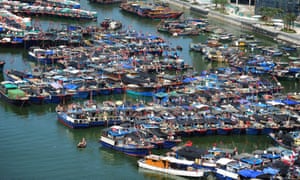
China is using large numbers of irregular maritime militias, dubbed “little blue men”, to assert and expand its control over an increasingly large area of disputed and reclaimed islands and reefs in the strategically important South China Sea, the Pentagon says.
The militias, comprising hundreds of fishermen and motor boats mainly based on Hainan island, south of the mainland, have been involved in “buzzing” US navy ships and those of neighbouring countries with rival territorial claims.
By using ostensibly civilian craft and personnel, China is avoiding direct military-to-military confrontations and gaining an element of deniability, said Abraham Denmark, deputy assistant US defence secretary for east Asia, presenting a report on military security involving China.
“Some of their fishing vessels and coastguards [are] acting in unprofessional manners in the vicinity of the military forces or fishing vessels of other countries in a way that’s designed to attempt to establish a degree of control around disputed features,” Denmark said. “It seems … these activities are designed to stay below the threshold of conflict, but gradually demonstrate and assert claims that other countries dispute.”
Maritime experts say such behaviour exploits “grey zones” where US navy and other countries’ military rules of engagement prevent tough counter-measures.
The Chinese tactics have been likened to those of Russia during its 2014 intervention in Crimea and Ukraine, when armed forces lacking clear identification, known as “little green men”, were unofficially insinuated into the region by Moscow.
“China is trying to use these government-controlled fishermen below the radar to get the bonus without the onus to support its South China Sea claims,” Andrew Erickson, an associate professor at the US Naval War College, told Defense News, a US-based publication.
“It’s a phenomenon little known or understood in the US. While Russia’s little green men in Crimea are widely known, insufficient attention has been paid to China’s little blue men in the South China Sea,” Erickson said.
Introducing the Pentagon’s 2016 report on China’s military activities, Denmark said Beijing’s estimated military budget now stood at $180bn (£125bn) and it was rapidly expanding its capabilities in all areas.
China is continuing to employ “assertive” tactics in defiance of regional and international opinion to establish control and construct military facilities, including harbours and military air strips, on a “vast acreage” of either reclaimed land or existing South China Sea outposts that have been expanded. The report said China has reclaimed 3,200 acres of land in total.
“China’s leadership demonstrated a willingness to tolerate higher levels of tension in pursuit of its maritime sovereignty claims … China’s strategy is to secure its objectives without jeopardising the regional peace that has enabled its military and economic development, which in turn has maintained the Chinese Communist party’s grip on power,” Denmark said.
Brunei, China, Malaysia, the Philippines, Taiwan and Vietnam all have overlapping claims in the South China Sea, which has large oil, gas and fish reserves and strategically important shipping lanes. The US takes no sides in the disputes, but the US navy regularly patrols the area to maintain freedom of navigation in international waters.
According to the Pentagon, the maritime militias are drawn from China’s fishing fleet, which is officially said to number 21 million fishermen and 439,000 motor boats. The best-known are based in Hainan province, where local communities have long-standing historical and commercial interests in the South China Sea.
Hainan’s Tanmen militia, founded in 1985 at a port on the island’s east coast, was honoured by Xi Jinping, China’s president, who paid a visit to commemorate the so-called Scarborough Shoal incident in April 2012 when eight Tanmen fishing vessels defied a Philippines warship.
The Tanmen fishermen were lauded as an “advanced militia unit” by state media after the incident. Xi reportedly complimented them on their actions and urged them to build larger vessels, collect information in distant waters and support “island and reef” development.
According to a recent analysis by Erickson and Conor Kennedy for the Centre for International Maritime Security, “Chinese media coverage of Tanmen fishermen often states that a large portion of incidents in the South China Sea between Chinese fishermen and foreign states is attributable to the Tanmen fishermen and maritime militia, whose members resolutely oppose ‘foreign encroachment’.”
China Daily, a state media outlet, praised the maritime militias in February, saying they were improving their operational capabilities in line with the government’s new emphasis on safeguarding China’s maritime interests.
“According to the People’s Liberation Army (PLA) Beihai city military command in the Guangxi Zhuang autonomous region, the proportion of maritime militia increased tenfold over the past two years. This enabled the city’s maritime militia to play a bigger role in the PLA navy, taking part in seven drills last year … Most of the maritime militia is made up of local fishermen.”
The difficulties involved in dealing with irregular maritime forces were illustrated last autumn when an American destroyer, the USS Lassen, passed close to a newly-built artificial island on Subi Reef in the Spratlys. It was already being shadowed by several Chinese navy warships, which behaved professionally and kept a safe distance, Defense News reported.
But several other smaller vessels, described as merchant ships or fishing vessels, were deliberately provocative, harassing the Lassen, crossing its bow and manoeuvring around the destroyer – behaviour to which the American ship had no ready reply. In a separate incident in 2014, Vietnamese ships were rammed by Chinese militia vessels.
Erickson said the maritime militias were designed to undertake such deception and obstruction activities. “The militia on board the ships were often clearly identifiable. They have uniforms – many if not all of them have uniforms. Putting on camouflage [uniforms], they qualify as soldiers. Taking off the camouflage, they become law-abiding fishermen.”
The Pentagon report claimed that, overall, Beijing was continuing down a path towards greater power projection, more advanced missiles and weaponry, and improved cyberspace and space capabilities. It also accused China of similarly assertive behaviour in the East China Sea and of preparing for potential conflict in the Taiwan Straits.
Japan’s prime minister has promised to cooperate fully with French authorities investigating suspicious payments made to a secret bank account alleged to have helped Tokyo secure the 2020 Olympics.
“I have instructed the education and sports minister to fully cooperate in the investigation,” Shinzō Abe told MPs on Monday.
He added that the education and sports minister, Hiroshi Hase, had told the Japanese Olympic Committee and officials involved in Tokyo’s bid to cooperate with the investigation into the payments, revealed by the Guardian last week.
The investigation centres on two payments, totalling at least US$2m (£1.4m), French prosecutors have said, that Tokyo’s bid committee made in July and October 2013 to Black Tidings, an account in Singapore linked to Papa Massata Diack, the son of the disgraced former world athletics chief Lamine Diack.
Black Tidings’ account is held by Ian Tan Tong Han who, according to an independent report commissioned by the World Anti-Doping Agency, was a consultant to Athletics Management and Services (AMS), a Switzerland-based firm that has a business relationship with the Japanese marketing and public relations giant Dentsu.
AMS was set up to market and deliver the commercial rights granted to it by the International Association of Athletics Federations (IAAF).
Papa Massata Diack, who is wanted in France on alleged bribery, money laundering and corruption charges, which he has denied, was employed by the IAAF as a marketing consultant, French prosecutors said.
The president of the Japanese Olympic Committee, Tsunekazu Takeda, who led Tokyo’s bid, insisted that the payments were legitimate and had been made in return for consulting services.
“The payments mentioned in the media were a legitimate consultant’s fee paid to the services we received from Mr Tan’s company,” Takeda and the bid committee’s former director general, Nobumuto Higuchi, said in a statement. “It followed a full and proper contract and the monies were fully audited by Ernst & Young ShinNihon LLC.”
Takeda, an International Olympic Committee (IOC) member, said the consulting services included planning for the bid, advice on international lobbying, and information and media analysis.
“The amounts paid were in our opinion proper and adequate for the services provided and gave no cause for suspicion at the time,” the statement said. “This message was conveyed to the IOC when these allegations first surfaced after a request for information from the IOC.
“The activity by the Tokyo bid committee was at all times fair and correct.”
Prosecutors said the money, credited to Black Tidings, was labelled as “Tokyo 2020 Olympic Games Bid” and came from an account opened at a Japanese bank.
A Dentsu spokesman told the Guardian the firm had no knowledge of any Black Tidings payment, adding that Tan was never employed as a consultant.
The first Syrians to be returned by plane under the EU-Turkey deal have been detained in a remote camp for the past three weeks with no access to lawyers, casting further doubts over EU claims that they are being sent back to a safe third country.
With hundreds more likely to be expelled in similar fashion in the coming weeks, the returnees have warned that those following in their wake face arbitrary detention, an inscrutable asylum process, and substandard living conditions.
Their claims undermine the legitimacy of the EU-Turkey migration deal, under which it is likely most Syrians landing on Greek islands will be returned to Turkey, on the assumption that they can live without restrictions once there.
Turkey has said they will be released soon. But a group of 12 Syrians returned by plane on 27 April who were contacted by telephone said they had simply been detained without clear legal recourse since they arrived in a remote detention centre in southern Turkey called Düziçi. The fate of two other Syrians deported along with hundreds of non-Syrians earlier in April is unknown.
“You can’t imagine how bad a situation we are in right now,” said one Syrian mother detained with her children, who now wants to return to Syria because she sees no alternative. “My children and I are suffering, the food is not edible. I’m forcing my children to eat because I don’t have any money to buy anything, but they refuse because there are bugs in it.”
The detainees have also been denied access to lawyers and specialised medical care, she alleged.
Like all the interviewed detainees, the Syrian asked to remain anonymous for fear of reprisals, but said she now wanted to return to Syria because she felt that even a war-zone would be better for her family than the refugee detention centres inGreece and Turkey.
Several of the Syrians had been living in Turkey before making the journey to Greece, but have now not been able to rejoin their families since being deported back to Turkish soil. After being detained in Greece following the start of the EU-Turkey deal, they agreed to be deported to Turkey on the assumption that they would not be granted asylum in Europe, and in hope of being reunited with their families.
“We cancelled our asylum claims in Greece to come back to our homes, not to this prison here,” said another inmate, who asked to be known by the pseudonym of Lara.
She added: “They won’t allow us to leave. I’m pregnant, I’m not good – what am I doing here? They just say we have to wait. If they told us you must stay here for one month or two months, that would be OK – but we just don’t know.”
Hundreds of non-Syrians deported under the EU-Turkey deal to a separate camp have told European politiciansthey have not been given any opportunity to claim asylum.
When asked to comment, a spokesman for the Turkish government predicted that the 12 Syrians would soon be let go. “We expect to release them next week once their background checks are completed,” said the spokesman, who spoke anonymously in accordance with government protocol. “Upon their release, they will be able to move into a refugee camp or opt out of the government-sponsored housing system.”
But other long-time inmates at the camp said they doubted that anyone would be released in the near future. One of the hundreds of other Syrian refugees also detained at Düziçi said that he had been held since 10 February after being seized from his home. He said he was still unsure of why he was detained, or when he would be released, and doubted any inmate would be freed soon.
“It’s all just talk,” said Abu Hassan, a grocer detained with his wife and children, who asked to be known under a pseudonym. “They are just pressuring us to go back to Syria and die there.”
Turkey has welcomed more Syrian refugees than the rest of the world combined since the start of the Syrian conflict in 2011, taking in roughly 2.7 million, according to UN data. But it stands accused of several rights abuses against refugees. Despite recent legislative changes, Syrians do not have the default right to work in Turkey, while many Syrian children are not in school.
Syrian refugees also report being shot at on the Turkish-Syrian border and others claim to have been deported back to Syria. Turkey denies both charges, and says it maintains an open-door policy to Syrian refugees.
“Turkey is the largest refugee-hosting country in the world,” the Turkish foreign ministry has previously said. “It is out of the question that the Syrians are encouraged to return to their countries voluntarily or forcibly. Turkey is bound by its obligations under international law and is determined to continue providing protection to the Syrians who have fled from violence and instability in their country.”
John Dalhuisen, Amnesty International’s Europe director, said: “The automatic detention of the 12 Syrians returned voluntarily to Turkey bodes ill for those whose appeals are currently being heard in Greece. This is not what the European public and Syrian refugees were being sold when EU and Turkish officials promised that their deal would scrupulously respect refugee rights.”
Dalhuisen added: “Turkey has to guarantee there’s no arbitrary detention, and if it does detain refugees and asylum seekers, they are held in decent conditions. If a group of Syrians who have voluntarily returned is locked up without medical care and lack of access to legal aid, what does that mean for those who are returned against their will?”
The US and other world powers have said they are ready to supply Libya’s internationally recognised government in Tripoli with specific weapons to counter Islamic State, as well as to train the new Libyan government’s presidential guard. They are also willing to train the Libyan coastguard to do more to stop people smuggling across the Mediterranean to Italy. Oil shipments from Libya are also to be resumed.
The announcements on Monday, designed to boost the new government of Fayez al-Sarraj as the sole legitimate authority in Libya, were made following a meeting in Vienna of diplomats including those from Europe, the US and the Middle East.
Behind the scenes at the summit, time was spent trying to persuade the Egyptian government and United Arab Emirates to stop supporting the forces of Gen Khalifa Haftar, the military leader in Tobruk who has refused to recognise the Tripoli government even though it has UN recognition.
A split between the east and west of the country has left it in stasis and allowed Isis forces to gain a firm foothold.
The west would like to see Haftar link up with the Sarraj Government of National Accord (GNA), which is based in Tripoli, ideally by agreeing to work under a unified military command. At present both the GNA and Haftar claim they are advancing on the Isis stronghold of Sirte, but there is scepticism that Haftar has the logistical ability to reach the city.
Egypt, concerned by border security, is reluctant to abandon its support for Haftar and would like to see him take power. UAE is reported to have provided military vehicles to help Haftar’s assault on Sirte.
The Vienna statement repeatedly urges the rival factions to unite, saying “legitimate Libyan military and security forces must work quickly to implement a unified command to coordinate the fight against Da’esh (Isis) and UN-designated terrorist groups in Libyan territory. Ensuring security and defending the country from terrorism must be the task of unified and strengthened national security forces. Libyans must fight against terrorism with unity.”
The statement adds: “We reiterate our commitment to ceasing support to and official contact with parallel institutions. The GNA is the sole legitimate recipient of international security assistance and is charged with preserving and protecting Libya’s resources for the benefit of all its people.”
Privately, the west of the country is hoping Saudi Arabia will act as a broker to reconcile the Arab regional powers operating in Libya, and admits it has few means with which to persuade Haftar to lower his political ambitions. There is also concern that Russia may print $4bn (£2.8bn) worth of currency for circulation in eastern Libya, raising the prospect of two rival currencies operating in the country. The UK-based currency maker De La Rue is urgently printing $2bn worth of notes for circulation in Libya, designed to prevent the economy seizing up.
Libya is currently under a UN embargo imposed to keep arms away from terrorists and rival militias vying for power. But the communique signed by the US, the four other permanent UN security council members and the more than 15 other nations participating in the talks, says they are “ready to respond to the Libyan government’s requests for training and equipping” government forces. The overall arms embargo will remain.
My boyfriend almost never initiates sex with me. We’ve talked about it, but never seem to get to the bottom of why this is. I enjoy being sexually assertive, but want to feel passion from him. I know he enjoys the sex, but I’m feeling fed up. I have been thinking about asking him to have an open relationship as I feel so frustrated. It would help if he communicated with me, but he does not tell me why.
Your boyfriend is communicating with you, in his own way. You understand what he is telling you, but don’t like the message. Good communication is a two-way process. It is a vital aspect of every area of your relationship – not just sex. If you are a person who needs more than grunts and bare minimum intercourse. you will have to make that clear, and educate him about your own needs. Do this without laying blame. Gently explain your feelings of frustration, and ask for what you want in an inspiring manner. There is a big difference between a seductive invitation for him to take the initiative, and a threat or ultimatum. Everyone has a unique set of erotic triggers, and it takes partners time to learn these things. Rather than settling for what is first offered, it is well worth making an effort to request alternatives before the “rut” occurs. Many people are willing to please their partners but just don’t know exactly how.
• Pamela Stephenson Connolly is a US-based psychotherapist specialising in sexual disorders.
• If you would like advice from Pamela Stephenson Connolly on sexual matters, send us a brief description of your concerns to private.lives@theguardian.com(please don’t send attachments). Each week, Pamela chooses one problem to answer, which will be published online and in print. She regrets that she cannot enter into personal correspondence.
Nadia was sitting by the pool in a bathing suit when a white boy loudly announced how hairy her legs were. She was only 11 years old. As a teenager, her family imposed absurd expectations to maintain an unnatural hairlessness through painful waxing treatments. She would ask why the boys in her community were not shamed in the same way. The Pakistani-Punjabi American woman, wearing a bright red dress and black tights, recounted her childhood atYoni ki Raat (Night of the Vagina) on Friday with a large grin. The endless tribulations of body hair drew knowing laughs from the audience – the double-edged sword of white beauty standards and South Asian gender norms.
But the light atmosphere quickly deserted the theatre as Nadia began to describe how, despite her feminist convictions, she has internalized the compulsive need to remove her hair. Her body is now marred with ingrown hairs that she attempts to dislodge with tweezers and needles, causing further damage to her skin. With her castmates solemnly seated on either side of the stage, a teary-eyed Nadia wondered: “When am I going to stop mutilating myself? Probably never.”
The monologue set the tone for the second annual Yoni ki Raat, a transformational storytelling project performed by 10 South Asian and Indo-Caribbean women in New York City. Performers shared personal narratives on the intersections of sexuality, violence and family that manifest within each of them for two nights over the weekend at Helen Mills Theater.
Woven across overlapping contexts of whiteness, activism and cultural and religious pressures, the show spun colorful and resilient threads of truth into an intricate tapestry of lived realities that are often silenced or ignored.
Yoni ki Raat started building community through storytelling in 2015, inspired by Yoni ki Baat, the Bay Area’s South Asian take on Eve Ensler’s hugely influential play The Vagina Monologues. The show went beyond recitation, as some performers paired their stories with singing, dance, illustration and video. The four-month journey to tap into these layered, deeply rooted narratives began with a process Yumnah Syed called “story excavation”.